Launch offer — valid today only

The Easiest Way to Prepare for the Pesticide Applicator Core Exam With Every Topic Drawn Step by Step!

The label, signal words, REI and PHI, formulations, toxicity, PPE, drift, spills and calibration: in the manual it's a wall of text. Here every topic fits on one page, with the drawing and what you need to remember. 66 illustrated pages.

I WANT TO STUDY IT WITH DRAWINGS

🔒 Secure checkout · PDF by email · 30-day guarantee

One topic per pagethe drawing shows you the rule and the text walks you through it
66 illustrated pages11 parts, from who needs certification to the exam-day checklist
Up-to-date sources40 CFR Parts 171 and 156, EPA and extension sources

This Is What the Pages You Will Study Look Like

One topic per page, the drawing that shows you how it works, and boxes with what you need to know:

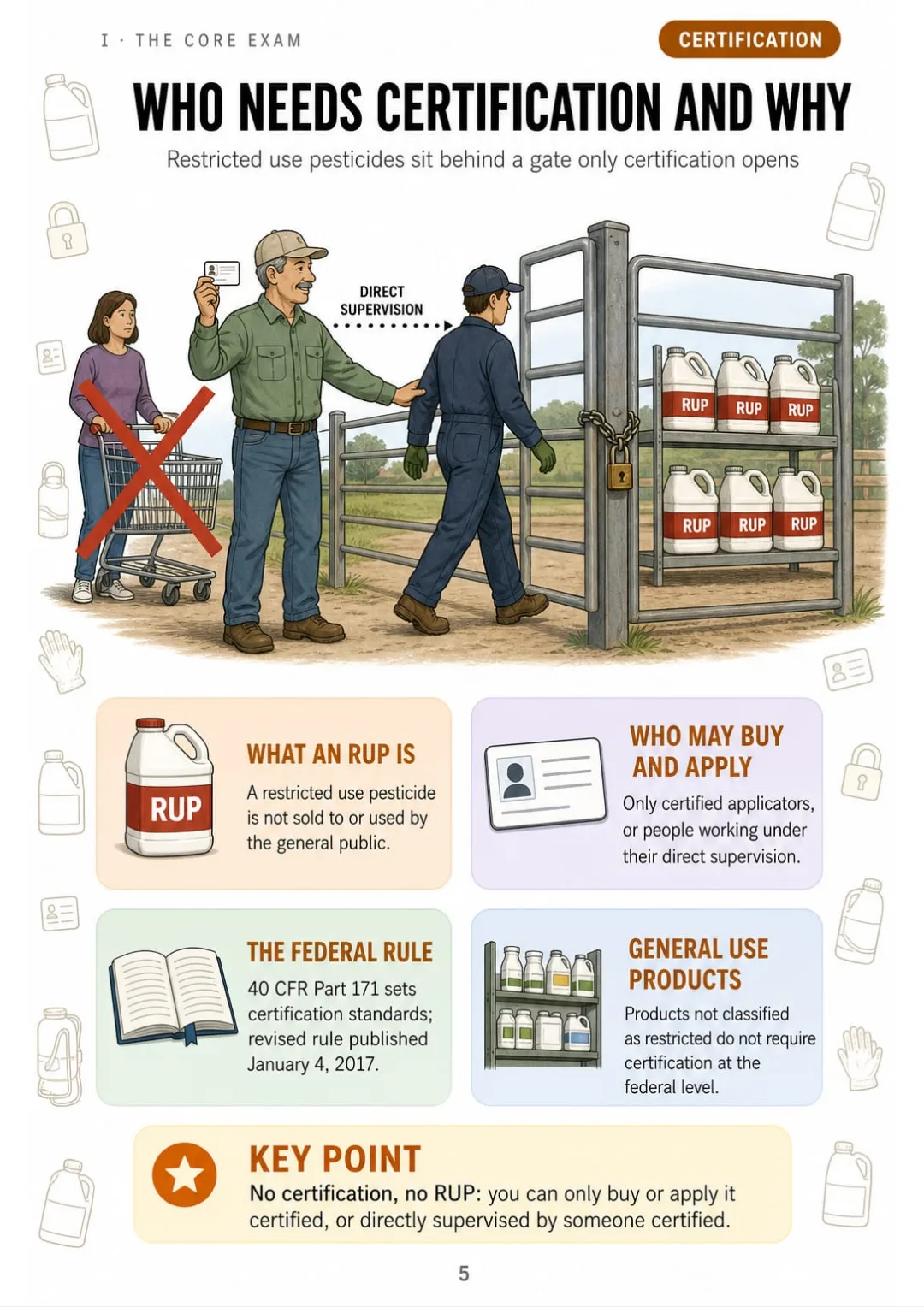
RUPs: only certified applicators or people under their direct supervision. 40 CFR Part 171, revised January 4, 2017.
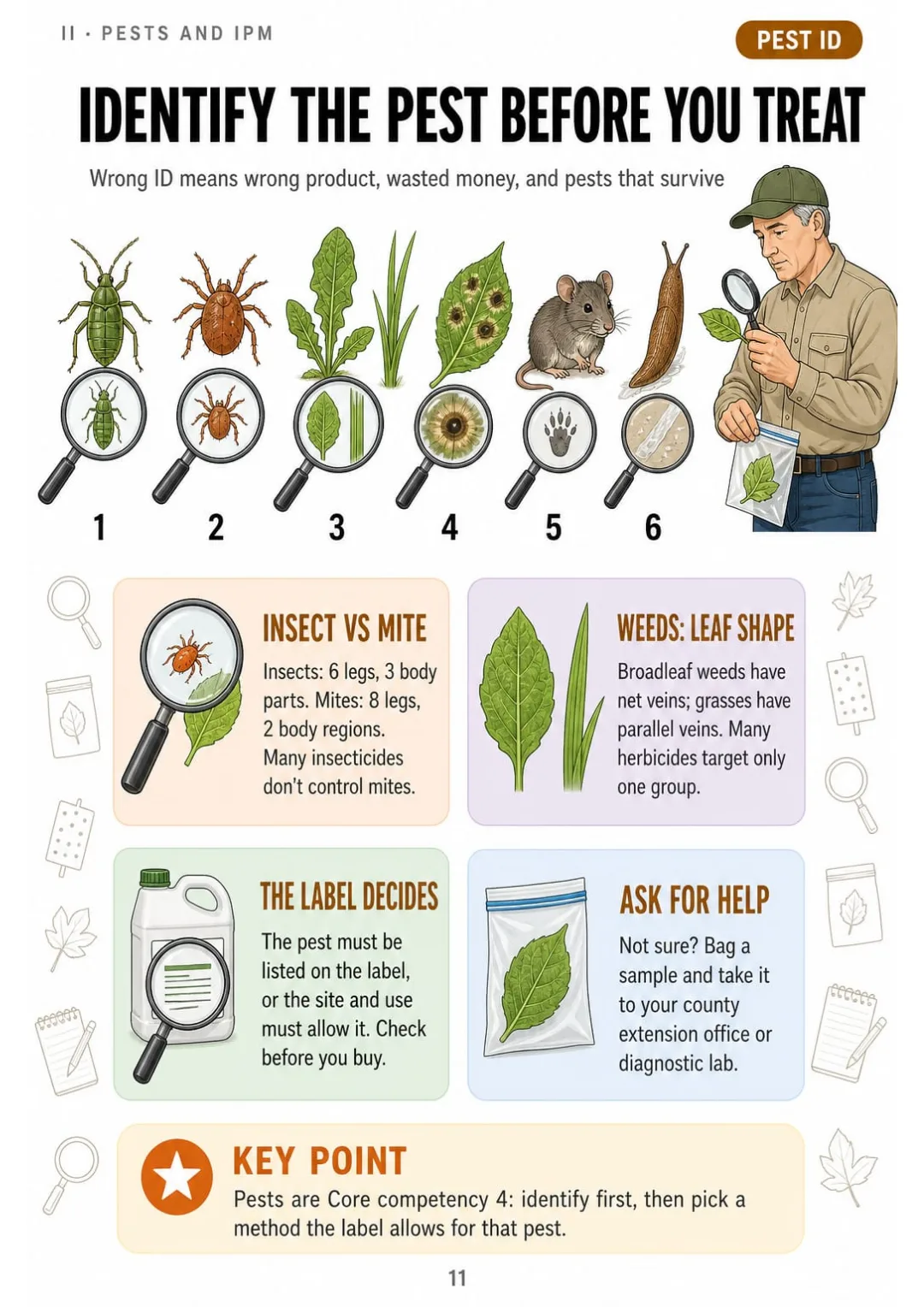
Insects 6 legs, mites 8 legs: six pest groups drawn with the feature that sets each apart
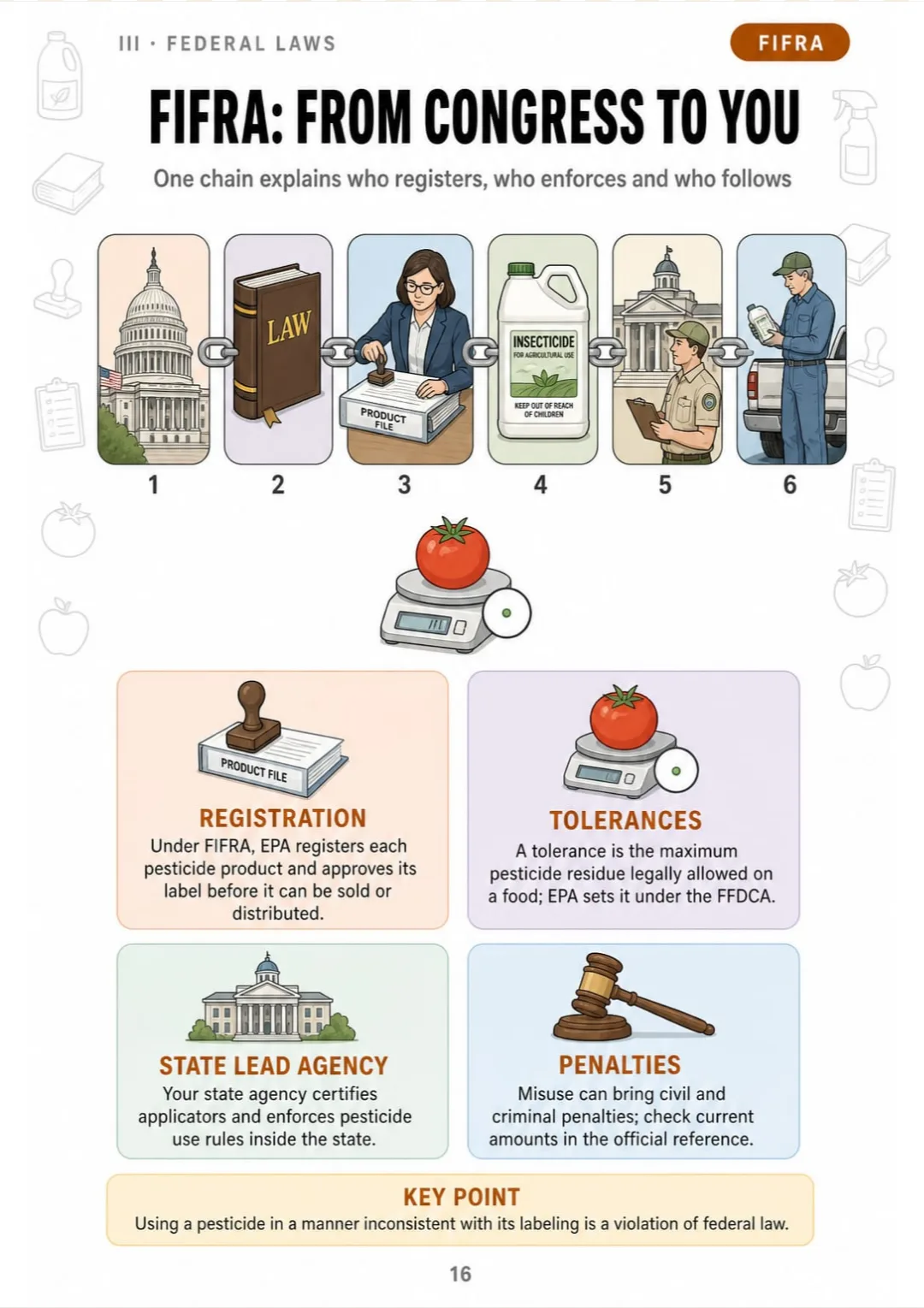
FIFRA as a chain: EPA registers the product, the label carries the law to you
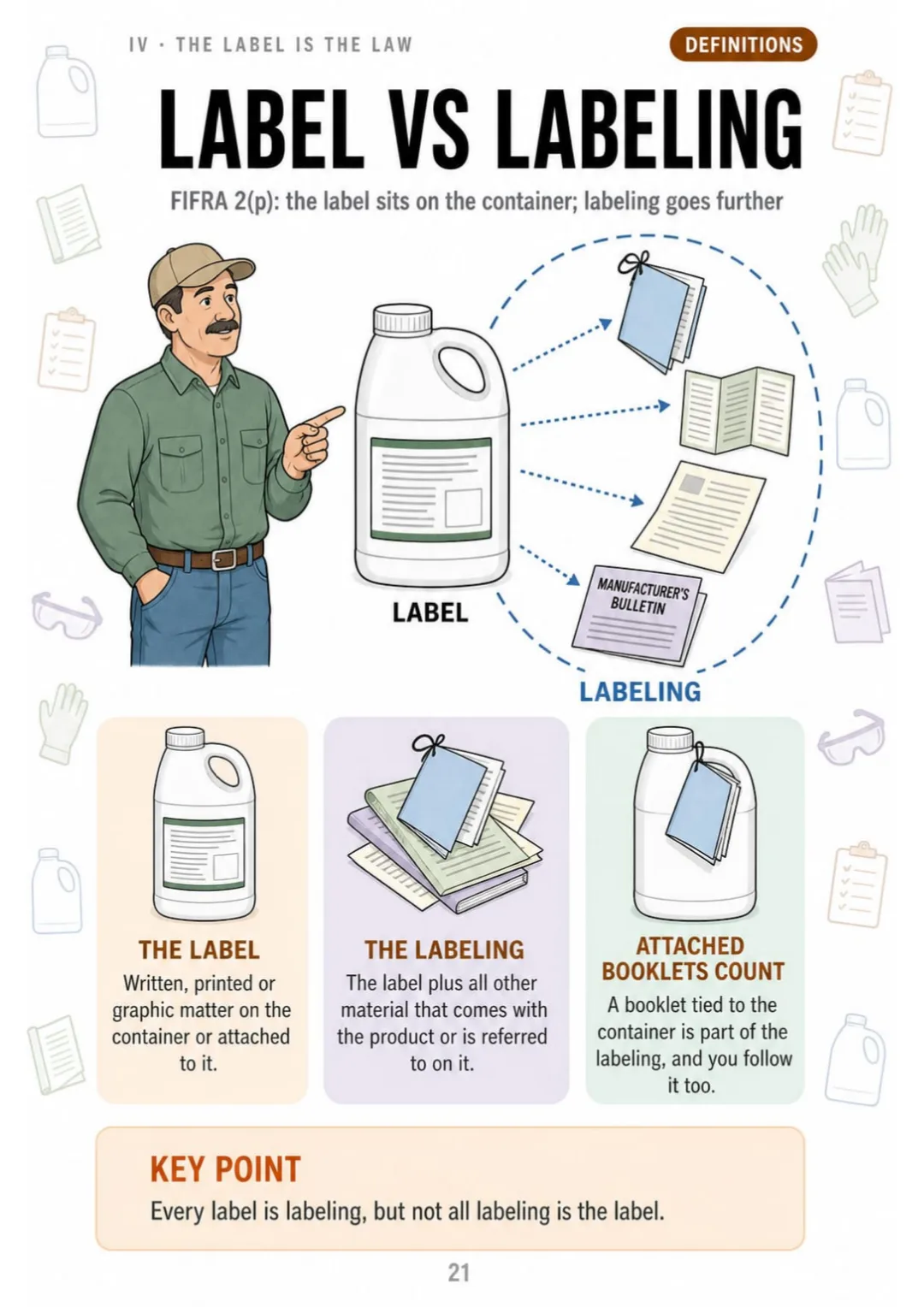
FIFRA 2(p): label = on the container · labeling = label + all accompanying material
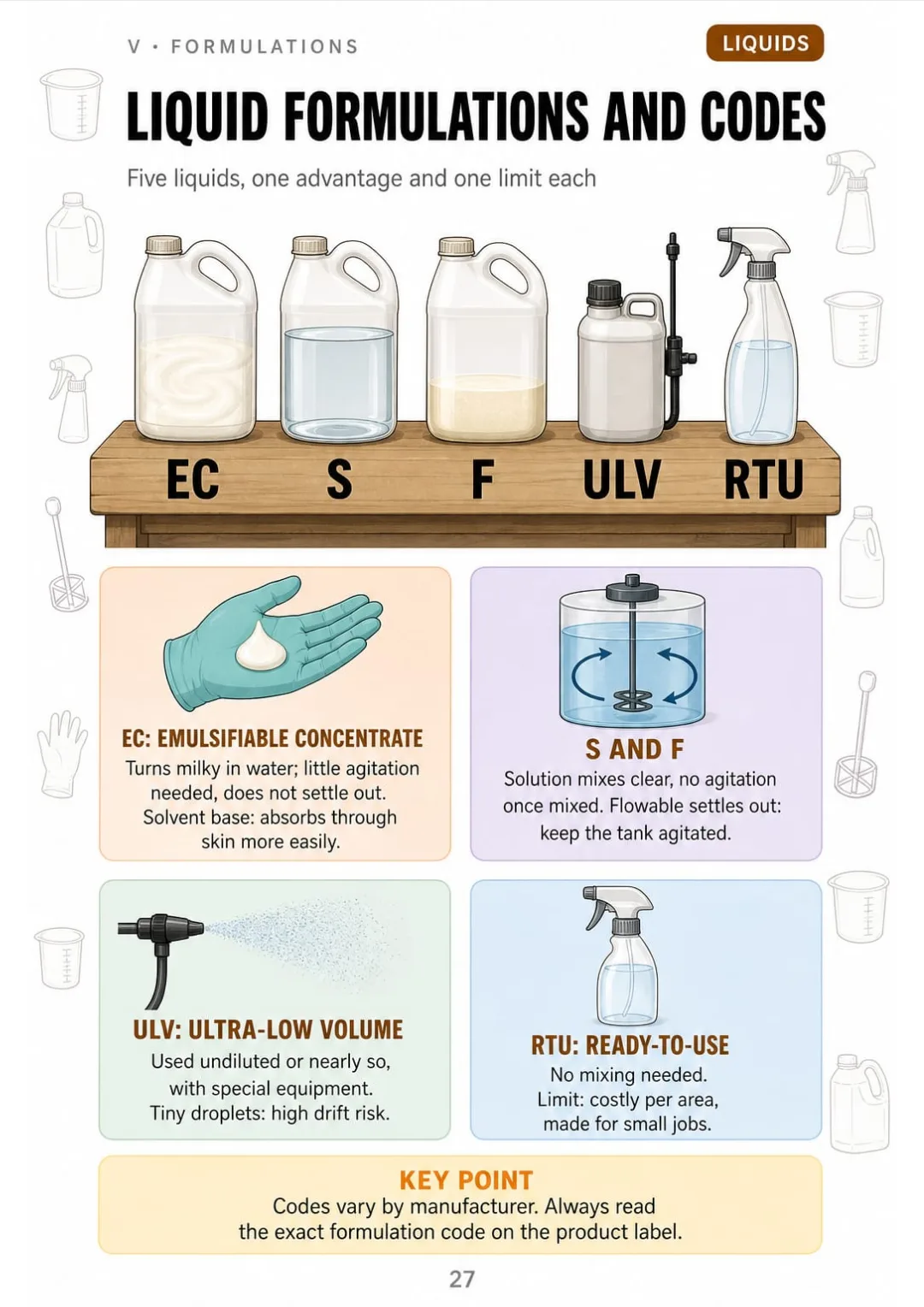
EC, S, F, ULV, RTU: what each liquid needs in the tank
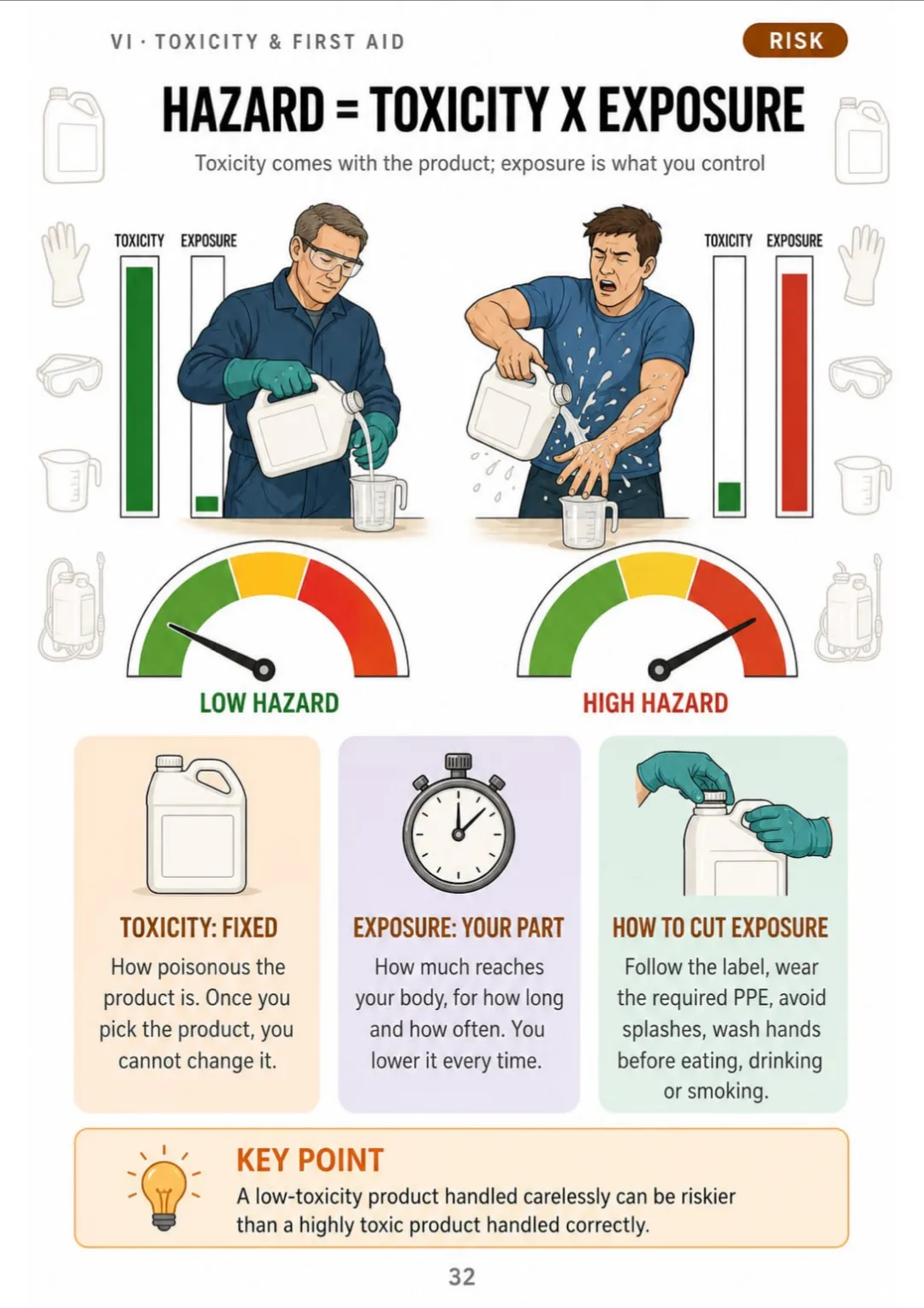
Hazard = toxicity x exposure: two dials show why exposure is the part you control
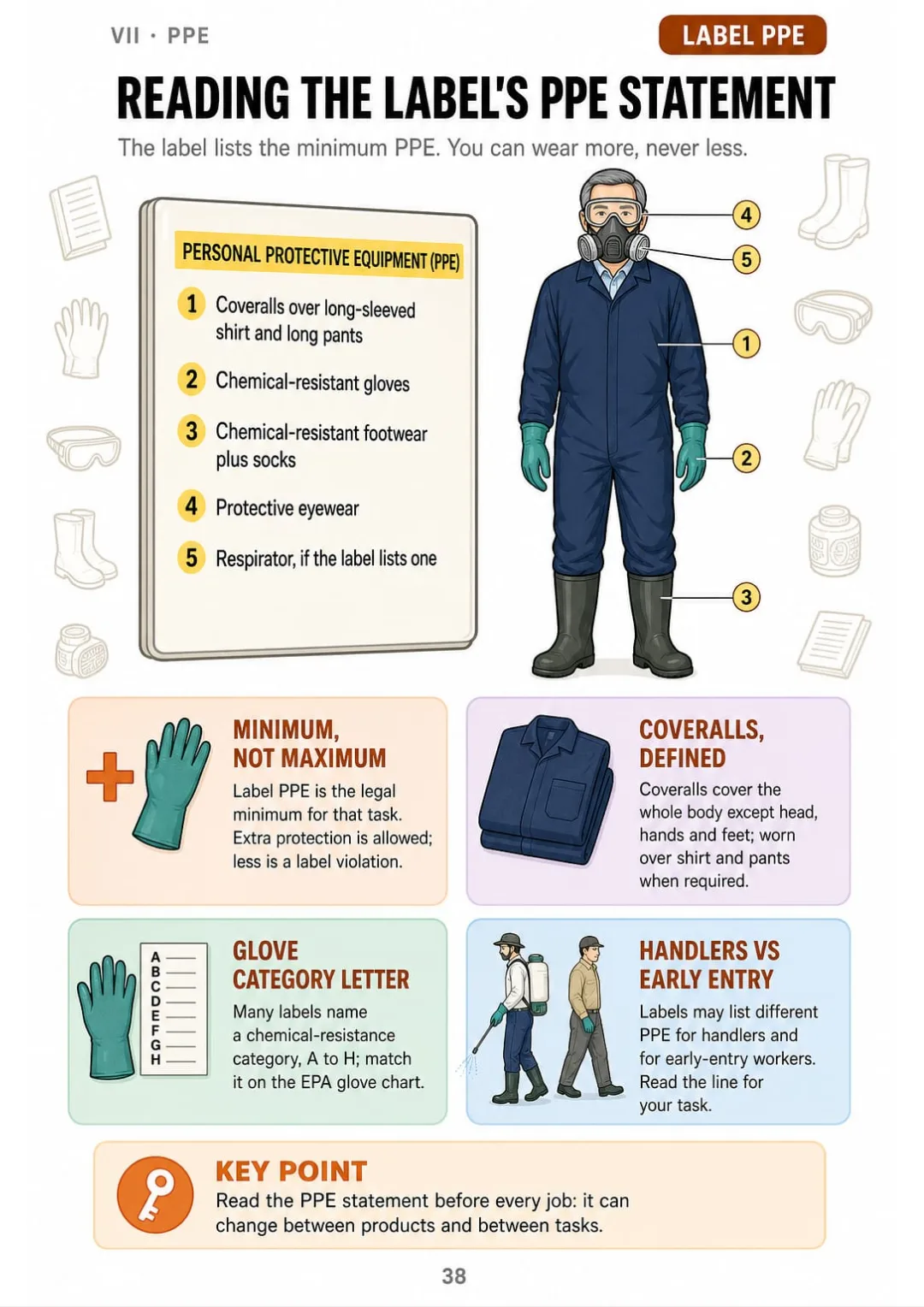
Label PPE = legal minimum: coveralls, unlined gloves, boots, eyewear, respirator if listed.
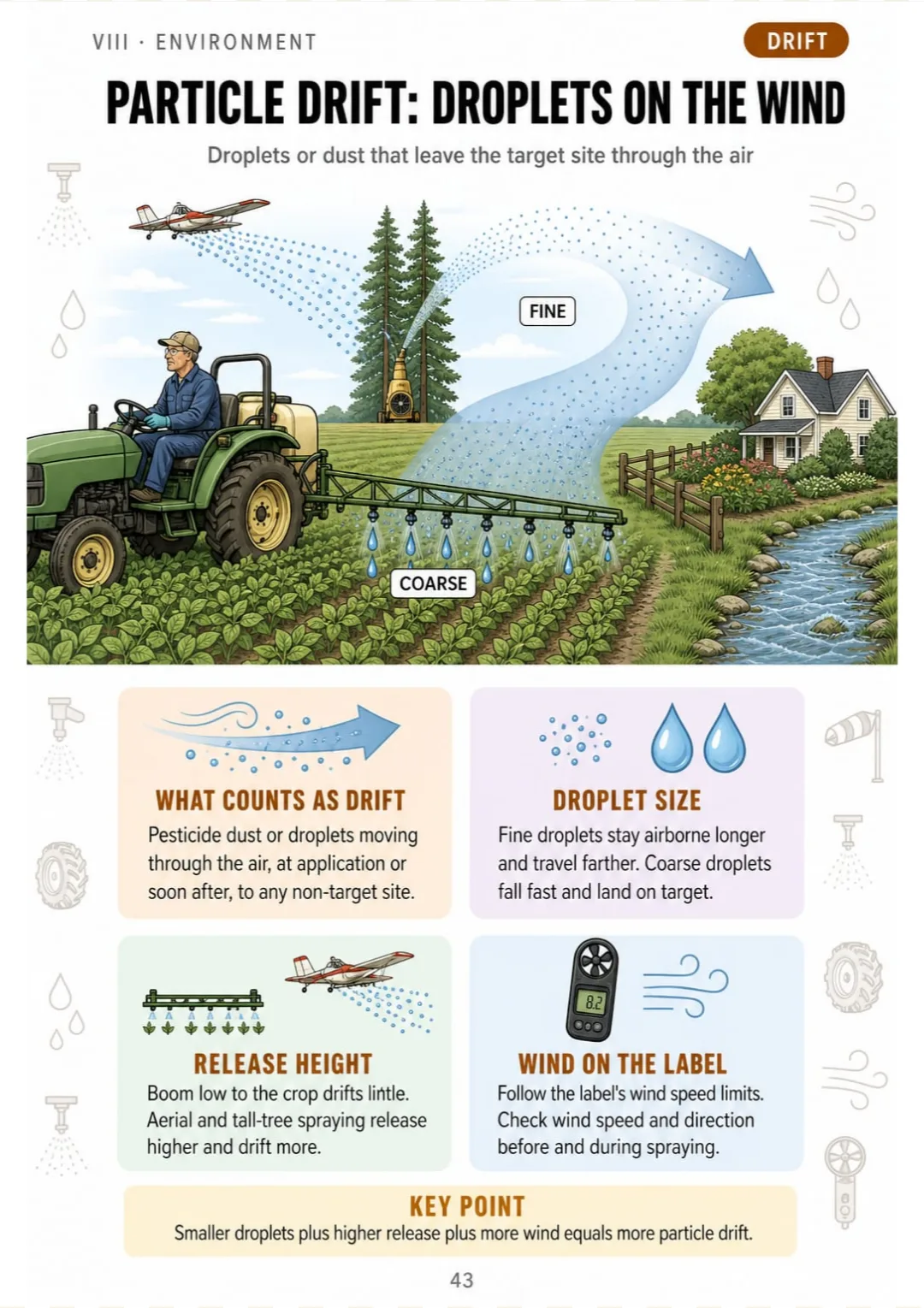
Particle drift: fine droplets and high release drift most; coarse, low sprays stay on target.

Swipe to see more →

These are real pages from the book. The table of contents is the full one: 11 parts and 62 topics.

It's Not That You Have a Bad Memory. It's That Nobody Put It in Order.

You've read the FIFRA chapter three times. You close the manual...

...and you can't say who registers the product, what the penalties are or where the label fits in. It was just lines of text.

FIFRA as a chain: EPA registers the product, the label carries the law to you

Here FIFRA is one page, drawn as a chain: Congress passes the law, EPA registers the product, and the label carries the law all the way to you.

And on the pages next to it, every rule gets its own drawing: restricted vs general use, supervising noncertified applicators, the Worker Protection Standard and endangered species bulletins.

First you understand why it works that way. Then the order sticks on its own.

SEE THE DIFFERENCE

Stop Memorizing Rules You Can't Picture:

THIS
  • Pages and pages of dense text
  • Rules without a single drawing
  • On the exam, you don't know where to start
Accurate identification of the pest is the first step in any pest management program, since the selection of an appropriate control method depends on the biology, life cycle and habits of the target organism. Adult insects are characterized by three body regions and six jointed legs, whereas mites, which are arachnids, generally possess eight legs and lack antennae. Weeds are classified as broadleaves, grasses or sedges, and plant diseases may be caused by fungi, bacteria, viruses or nematodes, requiring confirmation of symptoms and signs prior to treatment.
FOR THIS
  • Every rule drawn
  • One topic per page, with the key rules in boxes
  • You remember it because you've seen it
Insects 6 legs, mites 8 legs: six pest groups drawn with the feature that sets each apart
CONTENTS

Take a Look at the 11 Parts and 62 Topics

The Core exam, pests and IPM, federal laws, the label, formulations, toxicity and first aid, PPE, the environment, storage and disposal, calibration, and field rules and records: 66 pages and 62 topics, all drawn

IThe Core Exam · pp. 5-10
  1. Who Needs Certification and Why
  2. Private vs Commercial: Same Core, Two Paths
  3. The Ten Federal Core Competencies
  4. Exam Day: Proctor, Photo ID, Closed Book
  5. State Examples: Questions and Passing Scores
  6. Recertification and the Five-Year Limit
IIPests and Integrated Pest Management · pp. 11-15
  1. Identify the Pest Before You Treat
  2. Six Control Methods Side by Side
  3. Economic and Action Thresholds on a Graph
  4. Prevention, Suppression, Eradication
  5. Why Applications Fail: Resistance
IIIFederal Pesticide Laws · pp. 16-20
  1. FIFRA: Registration, Tolerances, Penalties
  2. Restricted Use vs General Use
  3. Supervising Noncertified Applicators
  4. The Worker Protection Standard at a Glance
  5. Endangered Species Bulletins Before You Spray
IVThe Label Is the Law · pp. 21-26
  1. Label vs Labeling
  2. Anatomy of a Pesticide Label
  3. Signal Words and Toxicity Categories
  4. Precautionary and First Aid Statements
  5. Mandatory vs Advisory Statements
  6. Finding the REI and the PHI
VFormulations and Adjuvants · pp. 27-31
  1. Liquid Formulations and Their Codes
  2. Dry Formulations and Their Codes
  3. Fumigants, Baits and Microencapsulates
  4. Adjuvants: Surfactants and Drift Control
  5. Mixtures and Compatibility
VIToxicity, Exposure and First Aid · pp. 32-37
  1. Hazard = Toxicity x Exposure
  2. LD50 and LC50: Lower Means More Toxic
  3. Four Routes Into the Body
  4. Acute, Chronic and Delayed Effects
  5. First Aid by Route of Exposure
  6. Heat Stress and Who to Call
VIIPersonal Protective Equipment · pp. 38-42
  1. Reading the Label's PPE Statement
  2. Chemical-Resistant Gloves, Never Lined
  3. Sleeves Over Gloves, or Gloves Over Sleeves
  4. Eyewear, Aprons and Respirators
  5. Washing and Storing PPE
VIIIPesticides in the Environment · pp. 43-48
  1. Particle Drift: Droplets on the Wind
  2. Vapor Drift and Volatility
  3. Temperature Inversions
  4. Runoff Across the Surface
  5. Leaching: Soil, Water Table, Groundwater
  6. Bees, Wildlife and Non-Target Plants
IXTransport, Storage, Spills and Disposal · pp. 49-54
  1. Hauling Pesticides Safely
  2. The Locked Storage Building
  3. The Three Cs of a Spill
  4. Triple Rinsing a Container
  5. Pressure Rinsing a Container
  6. Rinsate, Excess Mix and Empty Containers
XPlanning, Equipment and Calibration · pp. 55-60
  1. Planning the Application
  2. Parts of a Boom Sprayer
  3. Nozzles, Pressure and Droplet Size
  4. Measuring the Area of a Site
  5. The 1/128-Acre Method: Ounces Equal Gallons
  6. Drift-Reduction Checklist
XIField Rules, Records and Exam Review · pp. 61-66
  1. The Application Exclusion Zone
  2. Posted Signs and Oral Warnings
  3. Decontamination Supplies by the Gallon
  4. Restricted Use Pesticide Records
  5. Professional Conduct and Chemical Security
  6. Look-Alike Terms and Exam-Day Checklist

What If Every Topic Fit on a Single Page?

Picture this:

Instead of rereading half a page about drift, runoff and leaching without being able to picture them...

...you open the page and find droplets drawn on the wind, water moving across the surface and water soaking down past the water table, each with its name.

EC, S, F, ULV, RTU: what each liquid needs in the tank

And the label, the signal words, LD50, PPE layering and calibration turn into drawings and tables you read at a glance.

You stop repeating and start understanding.

That's exactly what The Pesticide Applicator Sketchbook does. It's not “just another manual.” It's 11 parts, 62 drawn topics across 66 pages, and at the end the look-alike terms side by side and an exam-day checklist. Because what your brain sees in order, it remembers.

Because what your brain sees organized, it remembers.

Here Is What You Get with The Pesticide Applicator Sketchbook:

Ipp. 5-10

The Core Exam

Who needs certification, private vs commercial, the ten federal Core competencies, exam day, state examples and recertification.

IIpp. 11-15

Pests and Integrated Pest Management

Identifying the pest, the six control methods, economic and action thresholds, prevention vs suppression vs eradication, and resistance.

IIIpp. 16-20

Federal Pesticide Laws

FIFRA, restricted vs general use, supervising noncertified applicators, the WPS at a glance and endangered species bulletins.

IVpp. 21-26

The Label Is the Law

Read any label in the same order, every time: label vs labeling, its anatomy, signal words and toxicity categories, first aid statements, mandatory vs advisory, and exactly where the REI and PHI sit.

Vpp. 27-31

Formulations and Adjuvants

Liquid and dry formulations with their codes, fumigants, baits and microencapsulates, adjuvants, and mixing compatibility.

VIpp. 32-37

Toxicity, Exposure and First Aid

Hazard = toxicity × exposure, LD50 and LC50, the four routes of exposure, acute, chronic and delayed effects, first aid by route and heat stress.

VIIpp. 38-42

Personal Protective Equipment

The label's PPE statement, unlined chemical-resistant gloves, sleeves and gloves, eyewear, aprons and respirators, and washing and storing PPE.

VIIIpp. 43-48

Pesticides in the Environment

Particle and vapor drift, temperature inversions, runoff, leaching to groundwater, and protecting bees, wildlife and non-target plants.

IXpp. 49-54

Transport, Storage, Spills and Disposal

Hauling, the locked storage building, the three Cs of a spill, triple and pressure rinsing, and rinsate, excess mix and empty containers.

Xpp. 55-60

Planning, Equipment and Calibration

Planning the application, boom sprayer parts, nozzles and droplet size, measuring the site, the 1/128-acre method and a drift-reduction checklist.

XIpp. 61-66

Field Rules, Records and Exam Review

The application exclusion zone, posted signs and oral warnings, decontamination supplies, RUP records, professional conduct and the exam-day checklist.

At the end of the book: Look-alike terms side by side and an exam-day checklist.
And That Is Not All: 2 More Books, Free

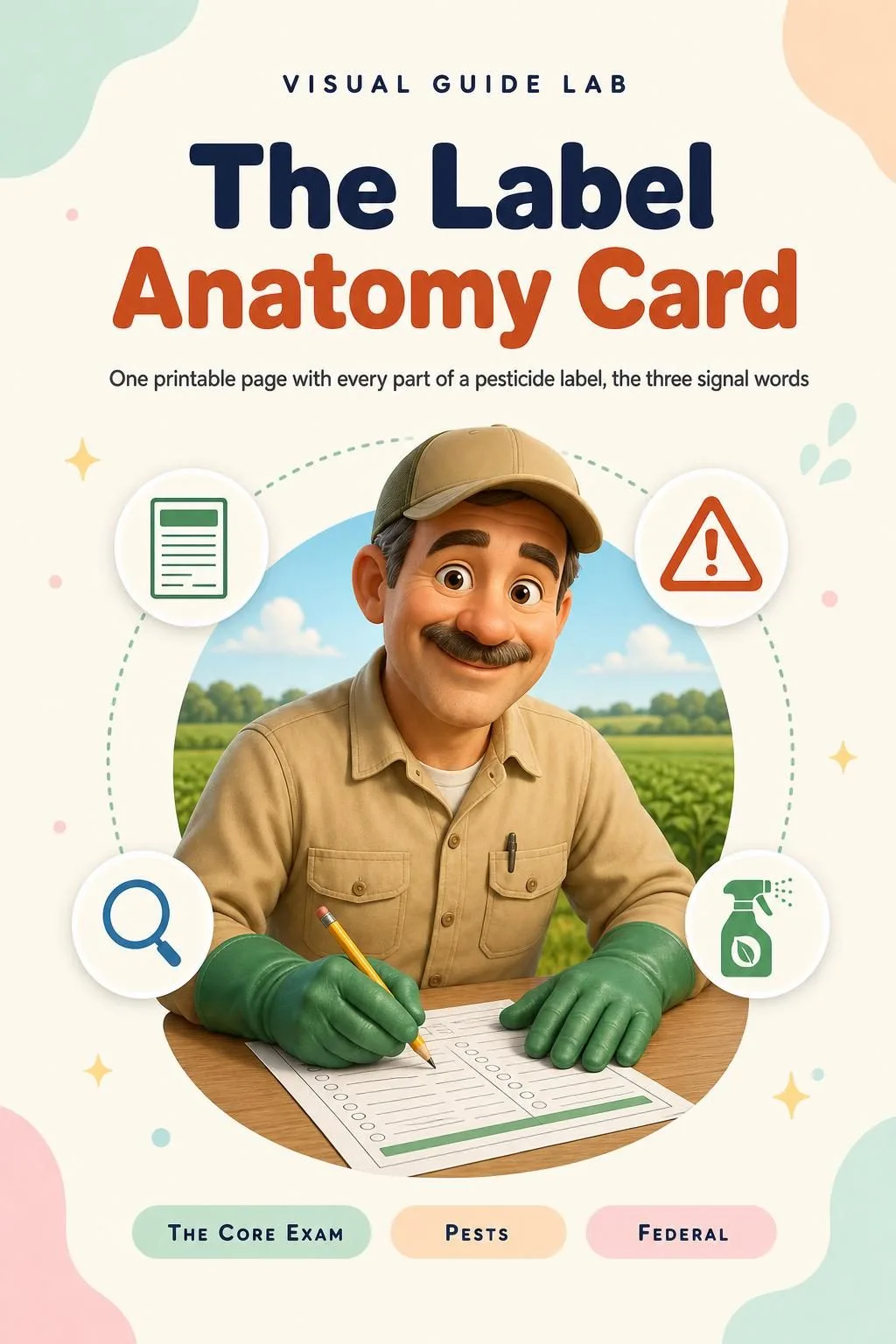
The Label Anatomy Card

BONUS 1: «The Label Anatomy Card»

Value on its own: US$ 17.90

One printable page with every part of a pesticide label, the three signal words in hazard order, and exactly where to find PPE, first aid, REI, PHI and storage and disposal.

250 Pesticide Applicator Terms on Cards

BONUS 2: «250 Pesticide Applicator Terms on Cards»

Value on its own: US$ 14.90

Review the vocabulary anywhere: the term on the front, a one-line definition and a tiny sketch on the back.

The Pesticide Applicator Sketchbook + 2 Free Books

  • The Pesticide Applicator Sketchbook: 66 illustrated pagesUS$ 87
  • BONUS 1: The Label Anatomy CardUS$ 17.90
  • BONUS 2: 250 Pesticide Applicator Terms on CardsUS$ 14.90
  • High-resolution PDF to printIncluded
Total value US$ 119.80
YOUR PRICE:
US$ 37
You save US$ 82.80
YES, I WANT THE PESTICIDE APPLICATOR SKETCHBOOK FOR US$ 37

📄 This is a digital PDF book sent to your email: nothing is printed or shipped.

Secure purchaseEncrypted payment30-day guarantee

PDF by email: The Pesticide Applicator Sketchbook reaches your inbox as a PDF, and the two free books come by email too. One-time payment, no installments or hidden costs.

Is This Book for You?

You're studying for the Core exam

You're studying for the Core exam

The label, federal laws, toxicity, PPE and calibration, one topic per page, to review after work and before the test.

Your exam date is coming up

Your exam date is coming up

The whole Core laid out at a glance, with the look-alike terms side by side and an exam-day checklist at the end.

You've been applying for years

You've been applying for years

A fast review for retaking the Core or recertifying by exam: what you already do right in the field, drawn the way the exam asks it.

To Sum Up: Here Is What You Get

US$ 119.80US$ 37
YES, I WANT THE PESTICIDE APPLICATOR SKETCHBOOK FOR US$ 37

📄 This is a digital PDF book sent to your email: nothing is printed or shipped.

30DAYS
GUARANTEE

30-Day Guarantee

30-day guarantee: tell us what didn't work and we'll refund 100%.

You have 30 days to try The Pesticide Applicator Sketchbook and the two bonus books. If it doesn't work for you, email us, tell us what didn't work, and we'll refund 100% of what you paid. One-time payment, no subscriptions, no surprises.

Frequently Asked Questions

How do I get the material?

By email, at the address you enter at checkout: The Pesticide Applicator Sketchbook as a high-resolution PDF, to read on your phone or print. The two bonus books, The Label Anatomy Card and 250 Pesticide Applicator Terms on Cards, come by email too.

Is it a monthly or one-time payment?

A one-time payment of US$ 37. No installments and no subscription.

Who is it for?

For anyone in the US preparing for the federal Core: commercial applicators in landscape, turf, pest control and right-of-way, municipal crews, applicators retaking the Core or recertifying by exam, and private applicators who want the shared basics (the label, safety, PPE, drift). It covers the Core only, not category exams like turf, ornamental or right-of-way, and some states use their own private applicator exam: check your state lead agency. The table of contents above shows every topic.

What sources is it based on?

The federal certification standards (40 CFR Part 171, revised January 4, 2017), the labeling rules (40 CFR 156), the Worker Protection Standard (40 CFR 170), USDA RUP recordkeeping (7 CFR 110), and EPA and extension sources. It follows the federal Core competencies and is meant to be used alongside the official Core Manual and your state's materials.

Is it official material?

No. It's an original, drawn study guide. It's not affiliated with or endorsed by EPA, NASDA, PERC, any state department of agriculture or any extension service.

Does it replace the Core Manual or my state's training?

No. It's a review companion. It doesn't replace the official Core Manual, your state's required training or the product label, and it doesn't give you a certificate, a license or recertification credits (CEUs). Exam format, number of questions, passing score and recertification rules vary by state: check your state lead agency.

Are the practice questions the real exam questions?

No. And they're not part of the main book, which is the drawn topics. If you want practice, at checkout you can add Core Exam Practice: 300 Original Questions Explained. Those questions are written for practice and are not official questions from any state exam.

Can I print it?

Yes. Print the whole book or just the pages you need, like The Label Anatomy Card for the truck or the shed.

What if I don't like it?

You have 30 days. Tell us what didn't work and we'll refund 100%.

One Last Thing Before You Decide...

You don't have to reread the same page hoping it sticks this time.

You don't have to memorize rules you can't picture.

And you definitely don't have to walk into the exam not knowing where to start.

There's a simpler way. And it's one click away. Now it's your turn.

One-time payment: US$ 37 · Guarantee: 30 days · PDF by email

YES, I WANT THE PESTICIDE APPLICATOR SKETCHBOOK FOR US$ 37

📄 This is a digital PDF book sent to your email: nothing is printed or shipped.